Language models are rapidly becoming embedded in the interaction fabric of our society — as assistants, tutors, collaborators, and autonomous agents across domains from healthcare to software engineering to creative work. Their versatility makes them uniquely powerful but also uniquely hard to secure: privacy and security risks arise not just from model internals but from the rich, open-ended ways people interact with and through these systems.
Humans sit at the center of these challenges — as victims of privacy violations and manipulation, as intentional or unintentional facilitators of risk, and as bystanders whose data is swept up without consent.
HAIPS@COLM aims to bring a human-centered, interdisciplinary lens to LM privacy and security, building on the 1st HAIPS Workshop held at ACM CCS 2025. We aim to foster a two-way exchange between the COLM community and researchers in HCI, usable security, and policy — grounding human-centered approaches in what LMs actually do, and informing model design with how people actually experience them.
Key Dates
- Submission Deadline
- Notification of Acceptance
- Camera-Ready Deadline
- Workshop
Invited Speakers
-
 Cornell Tech
 -
 Virginia Tech
 -
 Carnegie Mellon University
 -
 Google
 -
 ETH Zurich
Schedule
| Time | Session | Details |
|---|---|---|
| 9:00–9:10 | Opening remarks | |
| 9:10–9:40 | Invited talk | Florian Tramèr (ETH Zurich) LLMs as OSINT operatives AbstractCollecting, analyzing and using public data to answer intelligence questions. That sounds like exactly the type of thing LLMs are good at, no? This is also the definition of OSINT ("open source intelligence"), and I argue that LLMs are going to democratize these practices by giving everyone access to a cheap, automated and massively scalable AI-investigator. I’ll demonstrate some of our early experiments with LLMs as OSINT operatives, covering deanonymization and profiling of individuals from public Web data. The OSINT capabilities of LLMs suggest that we need to fundamentally rethink the privacy and security risks stemming from large-scale processing of public data. |
| 9:40–10:10 | Invited talk | Helen Nissenbaum (Cornell Tech) The Bystander Privacy Problem is Not a Privacy Problem AbstractNot first to pose a threat to “bystander privacy,” Meta Ray-bans (and similar), have drawn public ire, even disgust. Despite this, we have yet to see decisive pushback from regulatory bodies, and the companies rolling out these products, without a trace of irony, swear to an ongoing commitment to privacy. Setting aside corporate self-dealing and misdirection, Nissenbaum is interested, particularly, in the role of conceptual failure in sustaining the status quo. She explains why a privacy framework that has shaped regulatory thinking and institutional practice for decades (despite overwhelming counterevidence) bears significant responsibility for this stalemate. Offering the lens of contextual integrity as an alternative, I argue (spoiler alert) that singling out bystanders for special treatment, in fact, promulgates dominant truisms that we’d be better off without. |
| 10:10–10:35 | Coffee break + posters | |
| 10:35–11:05 | Invited talk | Ruoxi Jia (Virginia Tech) A North Star for a Human-Centered Data Economy AbstractAI systems draw their capabilities from human knowledge, creativity, and effort, yet the people who generate training data often have little visibility into its use or participation in the value it creates. What should guide the design of a data economy that works for both AI developers and data contributors? In this talk, I argue that a sustainable AI economy requires infrastructure that makes human contributions discoverable, traceable, and meaningfully rewarded. Drawing on our analysis of 73 publicly disclosed data deals, I examine three structural obstacles: missing provenance, unequal bargaining power, and pricing that fails to reflect data’s evolving, task-dependent value. I then introduce a framework for equitable data exchange and discuss recent work on two of its technical foundations: task–data matching and data valuation. These advances offer building blocks for connecting useful data with downstream needs and informing how contributors are compensated. |
| 11:05–11:35 | Invited talk | Maarten Sap (Carnegie Mellon University) Social Intelligence in LLMs: Implications for AI Privacy and Safety AbstractLLMs are increasingly deployed in settings where they must display social intelligence, yet it’s unclear that they even have social intelligence, or that socially intelligent AI is safe for users. In this talk, I will discuss ongoing research related to how user-centric privacy and safety are affected by social intelligence in AI. I will first introduce Sotopia-ToM, a new multi-agent benchmark to measure how well LLM agents navigate information asymmetry, finding severe privacy violations in many LLMs. Then, I will turn to risks of hidden manipulation by LLMs, demonstrating that while LLMs can manipulate users and cause real belief shift, they struggle to detect such manipulation, posing significant risks. I’ll conclude with some future directions towards more socially intelligent and safer LLMs. |
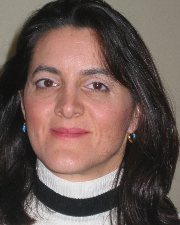
| 11:35–12:05 | Invited talk | Nina Taft (Google) Move Fast and Mend Things: Keeping Up with Evolving AI Harms AbstractAs AI tools are increasingly embedded into society, anticipating their evolving socio-technical harms remains a critical challenge. Traditional, expert-derived risk frameworks often struggle to keep pace with this rapid evolution. This talk introduces a novel methodology for constructing an AI harms taxonomy by analyzing millions of Reddit posts. Utilizing an LLM-facilitated, bottom-up approach, we capture granular, vernacular harms directly from lived user experiences. We discuss how organic social media discourse complements top-down frameworks. We summarize our taxonomy, discuss some specific privacy harms, and show how this method enables practitioners to "move fast and mend things" through rapid, actionable harm detection. |
| 12:05–13:25 | Lunch | |
| 13:25–14:10 | Panel discussion | Panelists: Helen Nissenbaum, Ruoxi Jia, Maarten Sap, Nina Taft; Moderator: Niloofar Mireshghallah |
| 14:10–14:15 | Break | |
| 14:15–14:25 | Spotlight talk | PrivacySIM: Evaluating LLM Simulation of User Privacy Behavior |
| 14:25–14:35 | Spotlight talk | Natively Unlearnable Large Language Models |
| 14:35–14:45 | Spotlight talk | Your Agent, Their Asset: A Real-World Safety Analysis of OpenClaw |
| 14:45–14:55 | Spotlight talk | Risk vs. Reward: Supporting Practitioners' Understanding of LLM Privacy Risks |
| 14:55–15:05 | Spotlight talk | Loose Lips: Understanding Privacy Leakage in Agentic Dialogue |
| 15:05–15:15 | Spotlight talk | Act on Your Behalf, Beyond Your Authorization: Benchmarking LLM Agent Authorization Alignment |
| 15:15–15:25 | Spotlight talk | Auditing Prompt Injection Defenses Before They Reach Users: What Strong Adversaries Reveal |
| 15:25–16:15 | Poster session + coffee | |
| 16:15–17:15 | Unconference discussions | |
| 17:15–17:30 | Closing remarks |
Call for Papers
HAIPS@COLM invites work that studies, critiques, and builds privacy, security, and safety protections for language models and agentic AI systems as technologies used by real people. We welcome submissions from both the core language-modeling community and the HCI, usable security, privacy, and policy communities.
We especially encourage work that connects technical mechanisms with human needs, including systems, tools, infrastructure, empirical studies, benchmarks, design work, policy analysis, audits, and position papers. Human-centered work need not always include a user study; technical papers are welcome when they clearly articulate the people, workflows, communities, or deployment contexts their work is intended to benefit.
Topics of Interest
Topics of interest include, but are not limited to:
- Human expectations, consent, and control over data used in LM systems
- Privacy- and security-preserving LM infrastructure for protecting people and institutions in real-world deployment contexts
- User-facing protections that help people understand and prevent LM privacy and security risks
- Human oversight, delegation, and accountability in agentic, personalized, and tool-using LM systems
- Evaluation and benchmarking of LM and LM-system privacy, security, and safety through a human lens
- Human impacts of adversarial LM-enabled privacy and security threats
- User vulnerability, manipulation, deception, and dark patterns involving language models
- Effects of language models used as simulated users, evaluators, auditors, or research participants
- LM-powered tools that support privacy, security, safety, and human agency
- Developer and organizational practices, risks, and responsibilities in LM design and deployment
- Human-centered policy and governance for LM privacy, security, and safety
Our goal is to bring together researchers who identify emerging risks, understand their human and societal implications, and build practical protections that make language-model systems safer, more private, more secure, and more accountable in real-world use.
Submission Format
- Long papers: up to 9 pages, excluding references and appendices.
- Short papers: up to 4 pages, excluding references and appendices.
- Submissions may use the COLM, NeurIPS, or EMNLP format.
- Accepted papers are non-archival, leaving authors free to submit revised versions to other venues.
Review Process
Review will be double-blind on OpenReview, with at least two reviewers per paper. Conflicts of interest will be managed through OpenReview’s COI detection and self-declared conflicts.
Awards
We aim to establish Best Paper and Best Student Paper awards to highlight outstanding work, with particular attention to early-career researchers.
Submit your paper via OpenReview: https://openreview.net/group?id=colmweb.org/COLM/2026/Workshop/HAIPS
Organizers
-
 Northeastern University
 -
 University of Notre Dame
 -
 Johns Hopkins University
 -
 Carnegie Mellon University
 -
 humans& / Carnegie Mellon University